
Find Cheap Flights in the Philippines & Worldwide

Top Travel Destinations from the Philippines in 2026
Compare fares, book flights with ease, and enjoy budget-friendly travel deals across Asia and beyond




















Welcome to TICKETS!
With TICKETS.PH, compare flights from leading airlines in just seconds. Secure the best prices and travel with confidence.
About TICKETSBest Flight Deals from Airports Near You
Find unbeatable fares from major airports in the Philippines and make your dream trip a reality

Manila Ninoy Aquino
Nov 2026
Nonstop
One Way
Kalibo International (Boracay)
Nov 2026
From
₱2KManila Ninoy Aquino
Nov 2026
Nonstop
One Way
Bacolod-Silay
Nov 2026
From
₱2K
Manila Ninoy Aquino
Nov 2026
Nonstop
One Way
Roxas City
Nov 2026
From
₱2KManila Ninoy Aquino
Nov 2026
Nonstop
One Way
Tacloban
Nov 2026
From
₱2KManila Ninoy Aquino
Nov 2026
Nonstop
One Way
Mactan-Cebu International
Nov 2026
From
₱2KManila Ninoy Aquino
Nov 2026
Nonstop
One Way
Iloilo International
Nov 2026
From
₱2KManila Ninoy Aquino
Nov 2026
Nonstop
One Way
Caticlan (Boracay)
Nov 2026
From
₱2KManila Ninoy Aquino
Nov 2026
Nonstop
One Way
Bicol International
Nov 2026
From
₱2K
Manila Ninoy Aquino
Nov 2026
Nonstop
One Way
Cauayan
Nov 2026
From
₱2KManila Ninoy Aquino
Nov 2026
Nonstop
One Way
Tuguegarao
Nov 2026
From
₱2KExplore Exciting International Destinations
Discover top-rated flight deals to the most sought-after destinations around the world






Unmissable Flight Deals to Popular Cities
Fly affordably to your favorite destinations across the Philippines, Southeast Asia, and beyond


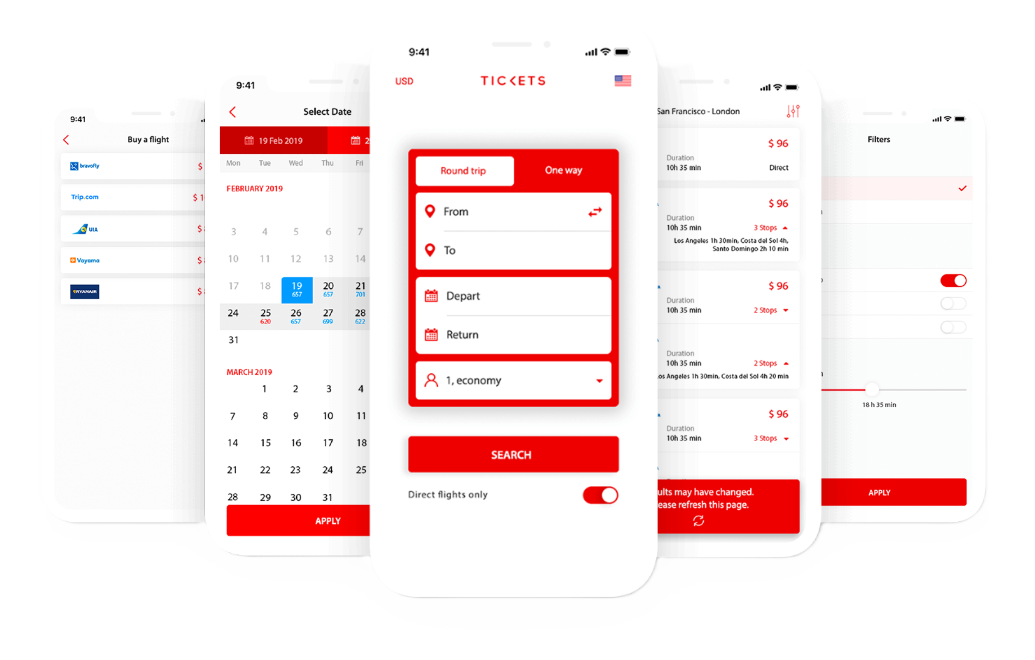
Discover incredible flight deals with TICKETS! Our user-friendly app simplifies your travel planning by comparing fares from hundreds of airlines and travel platforms, ensuring you always get the best prices for your next adventure.
Cheap Flights from the Philippines: When the Cheapest Time to Book Is and How to Save on Airfare
How far ahead should you book a flight to get a cheap fare in the Philippines?
For short and medium routes — like Manila to Cebu, Davao, or Boracay (Caticlan) — book one to two months before departure, with prices usually bottoming out around six weeks out. On short domestic hops, booking too early often costs more, not less, so the popular advice to 'book as early as humanly possible' simply doesn't hold here. Long-haul international flights from Manila, though — to Dubai, Europe, or North America — need a longer runway of several months, and even earlier during peak season. A single flight's price changes many times before departure, so chasing one 'perfect day' is a losing game. Instead, set a price alert and let the TICKETS app push you when the fare actually moves. The rule that always holds: don't wait for the final two weeks, when cheap fares climb fastest.
When is the genuinely cheapest time to book a flight?
Jumping on a Manila fare the moment seats open is one of the most expensive choices you can make, because the cheap stretch only comes later. Fares run high in the very-early window, fall to their lowest around six weeks before departure, then rise again as the plane fills up. Both extremes — too early and last-minute — cost you, and the savings live in the middle. The exception is long-haul and peak season, where seats genuinely sell out, so booking several months ahead protects both your price and your seat. For short, off-peak trips like domestic hops within the Philippines, there's no need to rush; for long or busy trips, lock in the price earlier. Rather than guess where your route is in that cycle, let TICKETS.PH's book-now-or-wait read about 12 months of price history and tell you whether to buy now or wait for a cheaper flight.
Which day of the week is truly cheapest to fly — and is it worth it?
Tuesdays and Wednesdays are usually the lowest-priced days to fly, while Sunday is the one to leave off your list. The cheapest day shifts by route and season, so make 'mid-week, not Sunday' your rule rather than chasing one magic date. The savings are small on cheap domestic hops like Manila to Cebu or Davao, but worth more on long-haul international flights, where moving off the weekend can save real money per person. One key distinction: this is about the day you fly, not the day you buy — the old 'buy on Tuesday' tip is dead, because prices now update continuously, not weekly. To spot cheaper dates on the calendar, TICKETS.PH's month price view shows you the cheap months; the mid-week rule handles the day.
Why is a split round trip sometimes cheaper than any single airline's fare?
The trick works because the cheapest outbound and the cheapest return from Manila don't have to be on the same airline — booked apart, the two can total less than any single carrier's published round trip. On every round-trip search, TICKETS.PH also checks the outbound and return separately, then pairs the cheapest outbound with the cheapest return into a single 'mash-up' result. That combination only appears when it genuinely beats the best normal round trip, with the savings in pesos shown; if a standard round trip ties or wins, that's what you'll see. The thing to remember about a mash-up: it's two separate tickets and two confirmations, so you'll need to open both booking pages before paying for either. TICKETS.PH flags it so you know exactly what you're booking, and the math only makes sense when the price gap is real.
Should I book two one-ways instead of a round trip?
On many routes out of Manila, two separate one-way flights can undercut the cheapest round trip, and you don't have to hunt for it manually, because every round-trip search on TICKETS.PH already tests it. When the cheapest outbound and the cheapest return sit on different airlines, two one-ways can total fewer pesos than any single round-trip fare. TICKETS.PH pairs them into one mash-up result, but it only surfaces when it's cheaper than the best standard round trip, with the savings shown. The trade-off is practical: a mash-up is two separate tickets on two airlines. You confirm each leg on its own, and you re-check your bags at the change of plane instead of having them checked straight through to the end. For a simple return with just a carry-on, that's usually no problem; but with tight connections or checked luggage, weigh the savings against the hassle.
If I can shift my dates, how much is that flexibility really worth?
Loosen your dates and the savings on a cheap flight pile up faster than any single trick can manage, because flexibility lets you stack them instead of relying on just one. Shift to mid-week instead of the weekend, then move into a cheaper off-peak month, and the two combine into a real cut off a peak-weekend fare. Shoulder season is the heaviest lever of all: the quiet stretches between holiday peaks are usually lower than the summer peak or the Christmas rush, so a Manila–Cebu or Manila–Davao hop tends to be cheaper then. The cheapest month varies by route and region, but 'avoid the obvious peaks' is right almost everywhere. Picking the perfect day of the week, by contrast, saves only a little on cheap routes. That's why a whole-month view beats checking one date at a time: on TICKETS.PH, the date picker shows the indicative cheapest fare per month in pesos across several months, so you see the cheap months at a glance.
Is it worth flying from a different airport to save on airfare?
Often yes — flying from a different airport can save money, and sometimes a lot, because many budget carriers are based at secondary airports with lower fees, like Clark in Pampanga as an alternative to Manila (NAIA) on some routes, and that shows up directly in the fare. The catch is the total door-to-door cost. A cheaper fare from a far-off airport only wins once you add parking, transport to get there, and the extra travel time to reach it — which can sometimes outweigh what you saved. TICKETS.PH detects the airport nearest to you, and you can also set your home airport manually. There's no automatic radius search bundling nearby airports into one query, so to try a secondary one, set it as your origin and compare. TICKETS.PH's destination map (/map) is the faster way to scan prices from your area to a range of destinations. The main lesson: compare the total cost of the trip, not just the headline fare.
Is a cheaper self-transfer flight worth the risk of a tight connection?
Out of Manila, the pesos you shave off with a self-transfer (virtual interlining) fare come at one price: you become the only safety net the trip has. It stitches together two separate tickets, often on different airlines with no agreement between them, to form one trip — and the airlines guarantee nothing to protect the connection. The real risk is the connection itself. If your first leg is delayed and you miss the second, that airline owes you nothing; you're a no-show and may have to buy a new ticket. You'll also collect and re-check your own bags between legs, and any compensation is measured per ticket. So price the risk, not just the headline cheap fare: leave a generous layover — a few hours with carry-on only, and longer with checked bags or an airport change — and consider insurance for a missed connection. TICKETS.PH surfaces these self-transfer options with a warning, and the route map marks every airport change so you can decide with your eyes open.
Is it worth setting a price alert for a cheap flight, or is it just noise?
Don't expect an alert to foresee a Manila–Dubai fare; expect it to react the split second the price drops. Fares move many times before departure, so a price alert through the TICKETS app watches one route and pushes you a notification the moment it genuinely drops — making timing a rule instead of guesswork. Just set it, then buy in the cheap window or on a real drop. Alerts pay off most when your dates are flexible, you're booking early, or you're watching long-haul routes from Manila, where the swings are biggest. The blind spot: a flash fare can vanish before any alert even fires. If you want the trend rather than a single ping, TICKETS.PH's book-now-or-wait scores about a year of price history as buy, wait, or neutral. Price alerts in the TICKETS app are free.
Will this fare drop further, or should I just buy now?
Pull up the price on a Manila–Cebu run and the question "can it still slide?" answers itself the moment you set it against the route's own 12-month history — and TICKETS.PH's book-now-or-wait tool sets the two against each other for you. Give it a route and it returns one of three answers — buy now, wait, or neutral — each with a confidence score, the cheapest and most expensive months, and whether the trend is rising, falling, or stable. The rule that follows the data: when you're already inside the cheap window (around six weeks out for short trips, several months for long-haul) and at or below the route's typical level, book now. When you're early in the cycle and the price is high for the season, waiting can pay off. The strongest signal is the simplest one: don't wait for the final two weeks, when prices climb fastest. Still unsure? Set a price alert in the TICKETS app and let the price movement decide for you.
If it's free with no markup, how does TICKETS.PH actually make money?
You never pay TICKETS.PH a single peso — the airline or agency does, through a referral commission that's only earned once your booking completes. The fare you see is the seller's own price, passed through directly with no markup. Click to book a flight from Manila and we hand you off to that provider's own site to pay, and they pay a commission for the referral. That commission doesn't affect the price you see or pay, so comparing cheap flights, the month price view, the destination map, and book-now-or-wait are all free — as are route price alerts in the TICKETS app. We only earn on a completed booking: no membership, no booking fee, and no markup added to the fare.
When is the cheapest time of year to book a flight in the Philippines?
The cheapest time of year to book a flight in the Philippines is the off-peak shoulder season between the holiday peaks; that one choice beats any day-of-week trick. In the Philippines, prices usually fall during the rainy-season months from June to October, when travel is quieter after the summer break and before the holiday rush. The expensive stretches are the summer peak (roughly March to May, including Holy Week) and the Christmas and New Year period in December. This shifts by route and destination — a local fiesta or major event can lift prices even off-peak — but 'avoid the obvious holiday and summer peaks' is right almost everywhere. On TICKETS.PH, you can view price insights for destinations that show the cheapest and most expensive months across 12 months, making it easy to spot the cheaper windows; then search for flights on the results page to see the current available fare.